- info@inthings.tech
- Room No. 16/591 Karinkallathani, Chethalloor-PO, Thachanattukara-II Palakkad.


About Inthings
Inthings, founded in May 2019, is a dynamic and innovative technology company driven by a team of visionary entrepreneurs and highly skilled software engineers.
Customers & Affiliations
Blog
Blog
17/02/2026
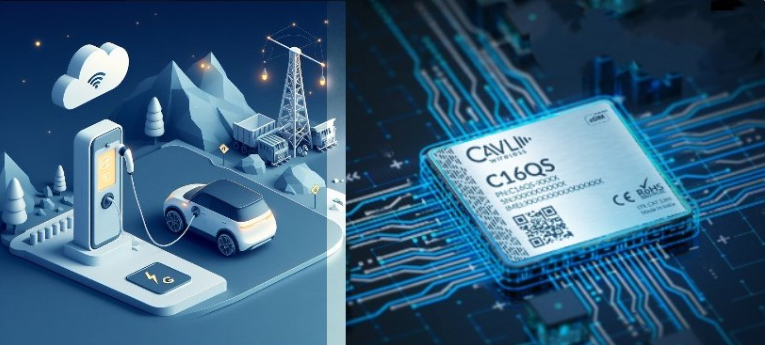
Advancing Connectivity with Cavli C16QS Module Integration
Category: Network and Communication
Introduction
We are thrilled to present our latest project aimed at enhancing the connectivity and functionality of the Level 1 EV charger for our esteemed client, Bolt Earth. This blog delves into how the integration of the advanced Cavli C16QS GSM module has significantly improved our commitment to driving innovation and empowering seamless IoT connectivity for Bolt Earth's charging solutions.
Problem Statement: Challenges with Connectivity in Level 1 Chargers
The primary challenge lies in the lack of a reliable method for Level 1 (3.3kW AC) Chargers to connect to the cloud using a SIM-based GSM module. Traditional solutions like Wi-Fi, while reliable in certain settings, fall short of meeting the remote functionality required by our client.
This issue poses a significant obstacle to the client's ability to monitor and control the charger remotely. The integration of the Cavli C16QS GSM Module with the charger is essential for enhancing its functionality and user experience. This is a critical requirement for effective decision-making and operational efficiency.
The Cavli C16QS: Revolutionizing IoT Connectivity
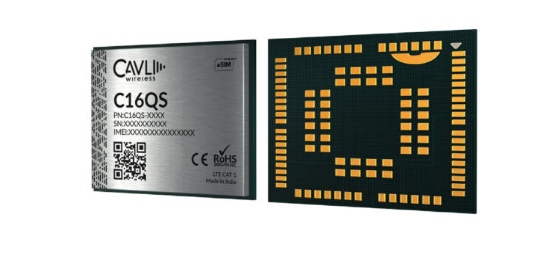
The Cavli C16QS is an innovative LTE Cat 1. bis module, meticulously designed for IoT and M2M applications. Compliant with 3GPP release 14 specifications, this module offers exceptional support for integrated GNSS, making it an ideal choice for location-tracking applications. With the option of an integrated eSIM, it enables global connectivity through the Cavli Hubble Device and connectivity management platform.
This module represents a significant leap forward for IoT solution makers seeking to transition from legacy 2G and 3G solutions to LTE. Its enhanced tracking features, independent LTE and GNSS power supply and sleep features, and low power modes make it ideal for applications such as asset tracking, POS (point of sale), remote monitoring, and energy metering. Available in region-specific variants, the C16QS maintains pin compatibility with Cavli C42GM and C42QM modules, ensuring flexibility and ease of integration.
Furthermore, the Cavli C16QS module stands out for its affordability, making advanced IoT connectivity accessible to a broader range of users and applications. It also offers the option of an integrated eSIM, enabling global connectivity through the Cavli Hubble Device and connectivity management platform, further enhancing its versatility and user-friendliness.
Summary of Advantages:
- Cost-Effective LTE Migration: Optimized for users moving away from sunsetting 2G/3G networks.
- Independent GNSS: Allows for location tracking even when the LTE modem is in a low-power state.
- Seamless Device Management: Direct integration with the Cavli Hubble platform for remote diagnostics and eSIM provisioning.
- Flexible Integration: Pin-to-pin compatibility ensures that hardware upgrades do not require a complete PCB redesign.
In conclusion, the Cavli C16QS module represents a significant advancement in IoT technology, offering a powerful, flexible, and cost-effective solution for a wide range of applications.
For inquiries regarding the development of a Computer Vision or specialized IoT solution, please contact us at info@inthings.tech today.
eSIM: The Future of Mobile Connectivity
eSIM (Embedded Subscriber Identity Module) technology is transforming the way we connect to mobile networks. This digital SIM card, embedded within a device, eliminates the need for a physical SIM card, offering numerous advantages and opening new possibilities for mobile communication.
[Image: Diagram comparing Physical SIM vs. Embedded SIM (eSIM) architecture]
Functionality and Advantages
eSIM performs the same functions as a traditional SIM card, enabling mobile communication and identification on cellular networks. It securely stores subscriber information, such as network credentials and user identity. The primary advantages of eSIM include space-saving, flexibility, remote provisioning, and support for multiple profiles on a single eSIM.
Use Cases
eSIM technology has a wide range of applications, including smartphones, connected devices, wearables, and IoT devices. It simplifies device setup, facilitates seamless network transitions, and enables global roaming without the need for physical SIM changes.
[Image: IoT devices and wearables leveraging eSIM for global connectivity]
Security
eSIMs are designed with robust security features to protect user information and prevent unauthorized access. Encryption and authentication protocols ensure secure communication, safeguarding user data and privacy.
Standardization
The GSMA (Global System for Mobile Communications Association) has defined standards for eSIM technology, promoting interoperability and compatibility across devices and networks. This standardization ensures seamless adoption and integration of eSIM technology globally.
Challenges
Despite its advantages, eSIM technology faces certain challenges. Adoption is still in progress, and compatibility issues with older devices and networks remain. Additionally, regulatory hurdles in some regions may impact the implementation of eSIM technology.
Future Trends
The future of eSIM technology looks promising. Continued integration into a wide range of devices, increased support from mobile carriers, and ongoing standardization efforts are expected to drive widespread adoption. eSIM is poised to revolutionize mobile connectivity, offering greater convenience, flexibility, and security.
For inquiries regarding the development of a Computer Vision or specialized IoT solution, please contact us at info@inthings.tech today.
Advancing Connectivity for Bolt Earth
We are currently engaged in a project to enhance the connectivity and functionality of our Level 1 chargers for our esteemed client, Bolt Earth. This is being achieved through the integration of an advanced piece of technology, the Cavli C16QS module. This LTE modem enables internet connectivity via cellular networks, marking a significant upgrade from the previous Wi-Fi connectivity.
[Image: Custom PCB design featuring the Cavli C16QS module]
Project Objective
The primary goal of this project is to design and develop a custom GSM board using the Cavli C16QS module and integrate it with the Level 1 (3.3kW AC) Chargers. This will facilitate users to establish a connection to the cloud using the SIM-based GSM module.
[Image: Comparison of data flow between Wi-Fi vs. GSM integrated chargers]For inquiries regarding the development of a Computer Vision or specialized IoT solution, please contact us at info@inthings.tech today.
Hardware Features of the Custom Cavli C16QS Board
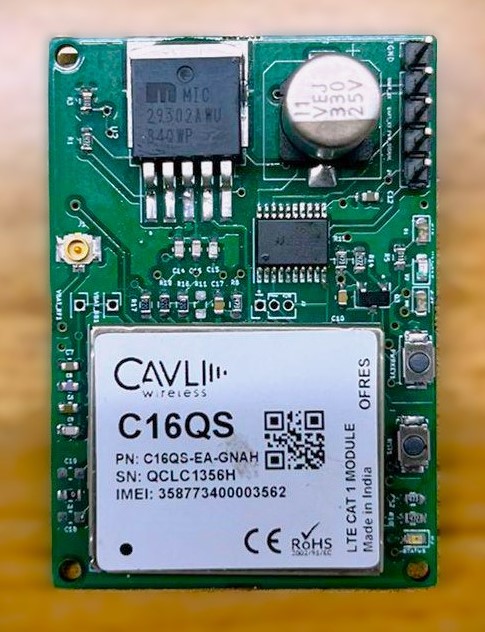
Our team has meticulously designed a custom board featuring the Cavli C16QS module, optimized for the rigorous demands of EV charging environments. The key hardware characteristics include:
- Power Supply Circuit: Equipped with a robust power supply circuit delivering a stable 3.7V output, capable of supporting up to 3A of continuous current to handle peak transmission bursts.
- Auto-Start Functionality: Designed to automatically initiate upon power supply, ensuring the charger remains online without manual intervention after power cycles.
- POWERKEY Pin: Incorporated on the module board and controlled by a dedicated GPIO pin of the Microcontroller, allowing for programmatic power management and hard-reboots if necessary.
- Micro-SIM Card Slot: Features a single micro-SIM slot to provide reliable cellular connectivity across various network providers.
- Antenna Connector: Includes a high-gain connector for the main GSM Antenna to ensure optimal signal reception, even in shielded or underground environments.
- Interface Options: Designed with a high-speed UART interface for versatile and reliable communication with the host controller.
- Status Indicators: Two integrated LEDs provide immediate visual feedback for Power and Module Status, simplifying on-site diagnostics.
- Reset Switch: Includes a physical reset switch primarily for updating GSM module firmware or performing manual system resets.
Firmware Features
The software layer of this project ensures seamless data orchestration between the charger and the cloud:
- Driver Development: We have developed a custom driver integrating the Cavli C16QS with the ESP32. This utilizes the ESP32's internal API to execute complex 4G LTE communication via a comprehensive set of AT commands.
- Internet Connectivity: Implementation of the Point-to-Point Protocol (PPP) establishes a transparent internet tunnel, enabling the ESP32 to function as a full-fledged network node.
- Cloud Connection Establishment and Communication: We have established a connection with the designated MQTT broker using the ESP-MQTT client. Our communication protocol ensures robust, reliable, and dependable connections. We have also implemented measures to handle any failures during connection establishment and sessions accordingly.
- Firmware Over-The-Air (FOTA): We are currently deploying FOTA capabilities via the 4G link. Using the ESP-HTTPS-OTA API, the system establishes a secure HTTPS connection to download and execute firmware updates remotely.
Challenges Faced
During the firmware integration process, we encountered specific challenges related to establishing Internet connectivity using PPP (Point-to-Point Protocol). One notable hurdle was the need for a particular AT command flow to ensure a seamless connection between the ESP32 and the Cavli C16QS module.
The intricacies of PPP implementation required careful consideration of the command sequence to initiate and maintain a reliable data link layer protocol. Understanding the nuances of this AT command flow became crucial for successful Internet connectivity. This involved meticulous testing and debugging to fine-tune the commands, ensuring they align with the PPP protocol standards and comply with the requirements of both the ESP32 and the Cavli C16QS module.
Navigating through this challenge demanded a deep understanding of the PPP protocol, AT command specifications, and the interplay between the ESP32 and the LTE module. Through thorough investigation and collaboration between hardware and firmware teams, we successfully overcame this challenge, resulting in a robust implementation of Internet connectivity using PPP. The experience gained during this process has further enriched our knowledge base and fortified the firmware integration for a more reliable and efficient IoT system.
As we continue to enhance our firmware capabilities, we remain committed to delivering solutions that meet and exceed the evolving needs of IoT connectivity.
Conclusion
This project demonstrates our commitment to innovation through advanced technology integration. By successfully bridging the gap between hardware constraints and cloud requirements, we have empowered Bolt Earth with a Level 1 charger that is truly "connected," regardless of local Wi-Fi availability. We look forward to continuing to provide solutions that meet Bolt Earth's needs and drive the future of the EV ecosystem.
Thank you for learning about our work enhancing connectivity with the Cavli C16QS module.